
Kaoru Watanabe - The Arch
Kaoru WatanaBE
The Arch
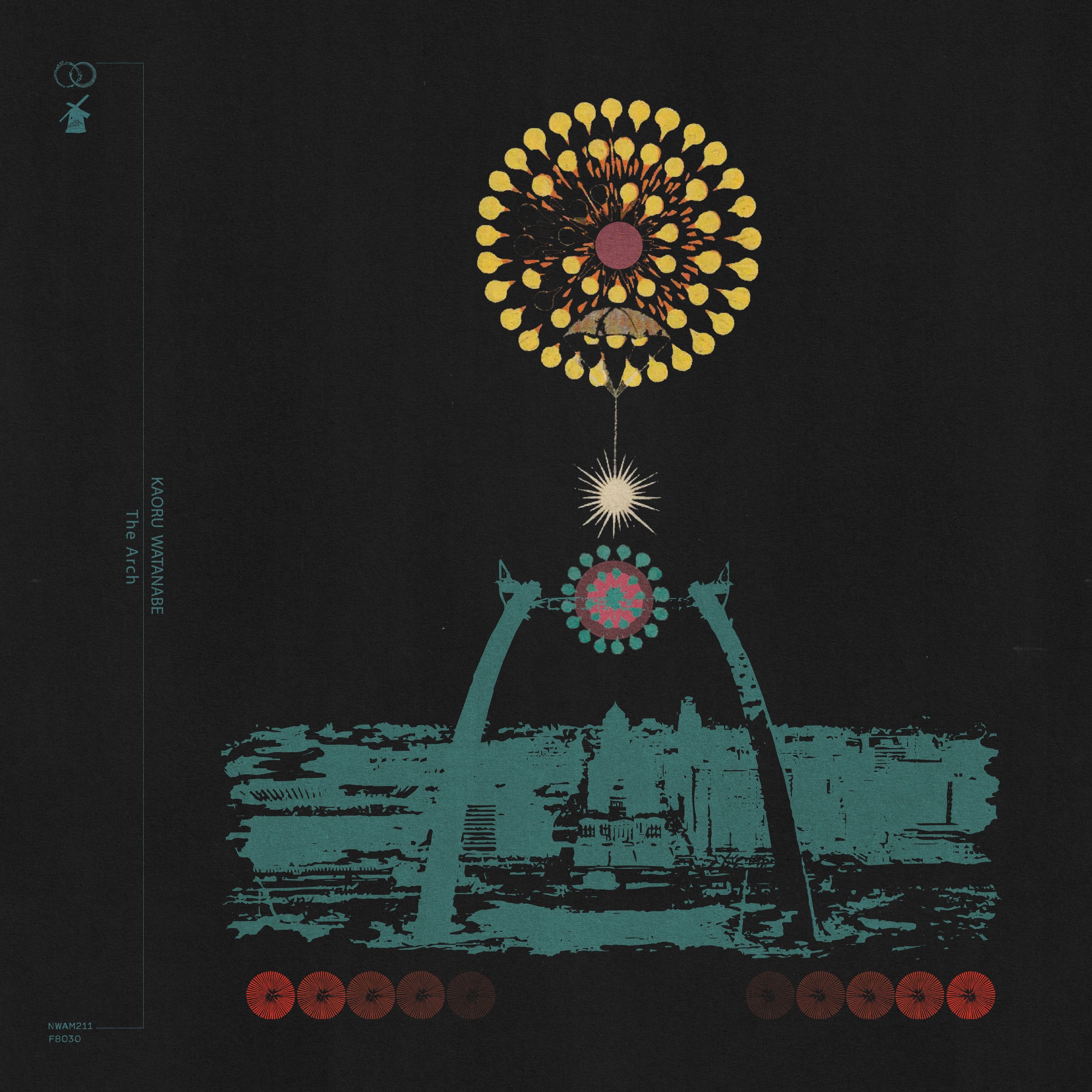
Release date: September 18, 2026
Kaoru Watanabe, the composer and instrumentalist whose work is rooted in traditional Japanese performing arts and infused with experimental and improvisational elements, is due to release his upcoming album, The Arch on September 18, 2026, via New Amsterdam Records in partnership with Figure 8 Recording. Watanabe is a highly sought-after collaborator, Watanabe has worked with such iconic artists as André 3000, Yo-Yo Ma, Wes Anderson, Mikhail Baryshnikov, Laurie Anderson, Jason Moran, Rhiannon Giddens, Silkroad Ensemble, and Japanese National Living Treasure Bando Tamasaburo.
Created in deep collaboration with Grammy-Award Winning producer William Brittelle, alongside executive producer Shahzad Ismaily, over the course of a year at Figure 8 as part of its Open Residency program, The Arch is a cathartic celebration of a life in music, of transformation and self discovery. The collaboration with Brittelle, who encouraged Watanabe to dig deep into his personal musical history, opened the floodgates for Watanabe and to use all of the tools at his disposal during the creation of the album. He explains, "William opened things up for me and encouraged me to put everything on the table. I began to experiment with sounds, instruments, and compositional tools I normally would not have. This process really allowed me to explore the entirety of my musical being."
Across the 10 tracks on the record, Watanabe places the vibrant timbres of traditional Japanese instruments (shinobue and ryuteki flutes, taiko drums, narimono percussion instruments, and koto, a 13-string zither) in compositions and jazz improvisations. These traditional instruments are contrasted by the many layers of acoustic and electronic instruments—piano, synthesizers, tenor saxophone, soprano and alto flutes, and harp, all played by Watanabe— which he uses to create a unique and shifting soundworld, never quite settling in one place or time but buoyed by his singular artistic vision.
-
The Arch is a culminating event for Watanabe, who has been working as a composer, improviser, collaborator, and curator for three decades in both Japan and the US, while tirelessly developing a highly personal approach to Japanese flutes and percussion. 2025 was a year of deep reflection and transformation for Watanabe: He turned fifty, enjoyed landmark achievements in his career, yet also dealt with the decline and eventually the death of his beloved mother. Watanabe explains, “I’ve done a lot of reflecting on my life, as well as my parents' lives, and can see how it all directly influences my current practice. Japanese immigrants who are Western classical musicians coming to the states, my growing up in St. Louis, reckoning with my lack of a cultural identity, and then eventually finding that cultural identity as an adult through music. I've been processing and understanding all of that through the lens of Western classical music, through jazz, through living in Japan and performing Japanese music at a very high level, and then coming back to New York and bringing all these experiences and types of musics back. With all these narratives that are residing within me, the question becomes: ‘how do I bring all those elements into one singular vision?’ It's something that I've been working on for decades through a lot of experimentation, playing with different types of groups, playing vastly different types of music, and it feels like all that work has culminated in this album.”
The opening phrases of the title track, “The Arch”, played on a koto, set the stage for a deeply personal piece that draws inspiration from Watanabe’s childhood memories of summers in St. Louis. “It is a work in which the heat, humidity, pavement, the movement of a skateboard, and the invisible social winds that shaped my early life become music. The Arch was never merely an architectural monument; it was a shape that hovered over my childhood: a marker of possibility and dissonance, beauty and unease, freedom and constraint,” says Watanabe.
Swift synth lines chase each other across the landscape of “Kazekaoru Gogatsu,” as Watanabe’s flute soars in defiant joy. “Literally translated as ‘fragrant May breeze,’ this joyful, romping, almost pop-like tune was written in one sitting the day after I spent a difficult week with my mother, one of the kindest, most elegant people I knew, who, due to dementia, was acting increasingly despondent and violent. Despite her steep decline, there were moments of lucidity and laughter.”
Long term access to a studio allowed Watanabe and Brittelle to experiment with sound production as heard on “Kazekaoru Gogatsu,” whose scurrying synth bass line was sent from a demo into Figure 8’s collection of vintage synths, on “Hiraeth” whose glitched out flute pads, recorded by processing flutes via a Lexicon Prime Time digital delay, create a pulsing stereo soundscape which Kaoru uses as a backdrop to channel John Coltrane during his final improvisation, and “Activities of Daily Living” which was composed by slowly adding improvisational elements over a long period of time, creating a gradually unfolding serene space.
Master shinobue maker Ranjo has praised Watanabe for “having the greatest sound on the shinobue of any player in the world.” A praise which Watanabe holds at the center of his practice which includes playing a taiko, made by Miyamoto Unosuke Shoten, an eighth-generation drum maker in Tokyo. “My mission and my work have centered around trying to honor the instruments, the legacy of the musicians who played them before me, the artisans who make them, and all the masters I've studied and performed with,” says Watanabe. “I feel I have a responsibility to represent the instruments as best as I can, and to exemplify the beauty of Japanese music, even as I perform original work or improvise in ways that are not traditional at all.”
“Kitsune No Yomeiri,” a piece that expresses the joy and wonderment of seeing the playful interaction of contradictory worlds—the world of human and animal, natural and spiritual, old and new, and acoustic and electronic, as well as his shinobue improvisations on “RUBICON,” with its twisted melody, subtle harmonic colorings, and electroacoustic instrumentation, execute Watanabe’s mission.
“Kumo No Ito” (Spider’s Thread) features the voice of Watanabe’s partner Yurie Ito which is juxtaposed atop a world built from long drum improvisations, whose layers were added slowly and intuitively through a process of additive improvisation. “I love the idea that, with modern technology, we can juxtapose intense drumming with gentle koto, harp, shinobue, piano, and singing.”
Watanabe’s piano playing can be felt clearly on “Wood Snake,” a piece inspired by Andrew Hill and the Zodiac year of the wood snake, symbolizing wisdom, transformation, and growth. The piece also represents the latest stage in Watanabe’s decades-long process to expand on the possibilities of the shinobue. He tells us, “it’s not an instrument designed to play chromatically or to maneuver through non-linear chord progression.”
This is the latest stage of a decades-long process to expand on the possibilities of the shinobue - an instrument not designed to play chromatically - to maneuver through non-linear chord progression, while retaining the sound and essence of the instrument.
Album closer, “Unadorned,” was written in honor of Watanabe’s partner, Yurie. He explains, “Whether it’s art, food, clothing, or the objects we surround ourselves with in our home, Yurie loves uncompromised quality, creativity, and truthfulness. She abhors people, places, and things that are fake, contrived, or superficial. She expects the same from me, especially when it comes to music. The melody and chords are simple and slow and drawn out, leaving plenty of room to luxuriate in the instruments' natural resonance and sustain. Beyond shinobue, koto, taiko, spoken word, and piano, my mother’s harp provides a nurturing and warm underpinning.”
-
Tracklist and Credits
The Arch
Kazekaoru Gogatsu
Whirlpools
Hiraeth
RUBICON
Kitsune No Yomeiri
Activities of Daily Living
Kumo No Ito (The Spider's Thread)
Wood Snake
Unadorned
Kaoru Watanabe: all compositions, shinobue, ryuteki, hichiriki, taiko, atarigane, suzu, ame uchiwa, koto, voice, soprano and alto flutes, tenor saxophone, piano, synthesizers, and harp
Yurie Ito: vocals on Kumo No Ito
Produced by: William Brittelle
Engineered and mixed by Michael Hammond
Mastered by Zachary Hanson
Executive Producer Shahzad Ismaily
PRESS & NEWS
ARTIST
COMPOSER