
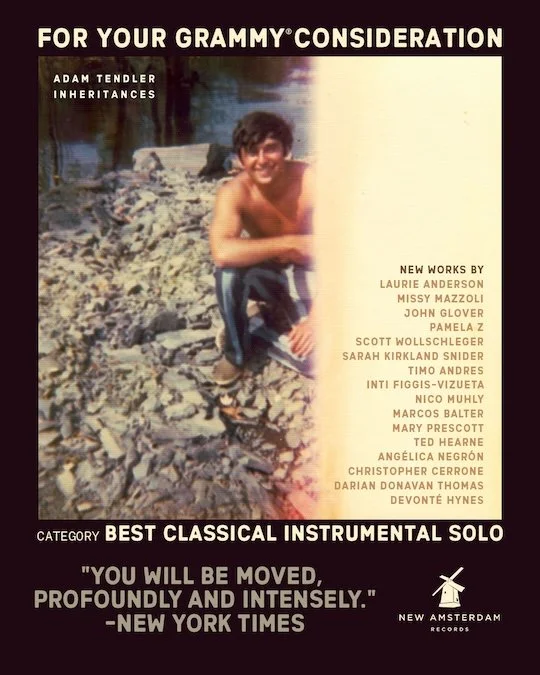
Adam Tendler — Inheritances
For Your GRAMMY® Consideration
Best Classical Instrumental Solo: Adam Tendler - Inheritances
“Inheritances: Adam Tendler’s musical testimony of love, grief and memory”
When the pianist Adam Tendler was handed a thick envelope of cash in a Denny's parking lot after his father’s unexpected death half a decade ago, he didn’t know what to do with his surprise inheritance. Yes, he was a thriving classical pianist in New York, his DIY approach to programming and presenting new music already earning him a stellar reputation in the worlds of mainstream and underground classical and contemporary music. But the city is expensive, of course, and perhaps he could offset his expenses for several months with the windfall.
While watching some friends perform one night, he had an idea: What if he funneled these funds into a series of commissions by some of his favorite composers and wove them into a program about memory and loss, relationships and life? The result is Inheritances, a breakthrough album and concert that expresses the pianist’s ambition and emotionally sophisticated playing in entirely new ways.
“If you do accept,” Tendler wrote to the composers he first recruited, “I trust your instincts [to take] the piece in any direction you choose.” Across 16 pieces, they do just that. Tendler responds to Laurie Anderson’s text prompts with thunderheads of notes, while Sarah Kirkland Snider’s “The Plum Tree I Planted Still There” moves between wonder and rage, practically rhapsodic as it investigates hallways of remembering. Nico Muhly’s contribution is comforting but blue, Pamela Z’s swelling and breaking and heavy, like grief itself. Inheritances concludes with “Morning Piece,” an 11-minute masterstroke by Blood Orange leader Devonté Hynes. Across its first half, it moves from diaphanous melody into stormy disarray before cracking open almost like a hymn, an act of deliverance from past to future.
-
Hello Friends.
As you may know, in October my father died. It came as a surprise and the circumstances aren’t entirely clear. We had a close relationship in my childhood that, for any number of reasons (loss of love not among them) grew more distant, or at least quieter, over time. I last talked to him on Father’s Day.
He left me cash as my inheritance. He kept cash, so I heard, in case of a revolution. My stepmother gave it to me in a parked car on New Year's Day outside of a Denny's in West Lebanon, NH. To plant that cash in the soil of something that may actually grow and—if you'll forgive me—live on, I have decided to commission piano pieces from composers whom I care about and whose work I admire. You are one of them.
I know how fiendishly busy you all are, and that this will be more a favor than a commission, so I understand if you wish to pass for any reason. If you do accept, though, I trust your instincts in responding to the commission and taking the piece in any direction you choose. I'm also happy to answer every question you may have; personal, musical or otherwise. This music may all one day share a concert program, a recording… but right now it's largely a "we'll see." While the actual platform develops, the only thing I ask is that you let me live with these works until I find them a home, together—somewhere.”
In an appearance on the nationally-syndicated Tamron Hall Show, Tendler described Inheritances as “a vessel for my grief,” an image he also detailed in his widely-read New York Times essay. “The goal for Inheritances, from the start, had been to provide a vessel through which I could connect to my elusive father, process my grief and reconcile with my past. But I also hoped that writing these pieces would provide a similar vessel for the composers, and ultimately that this shared experience would extend to our listeners.”
Some highlights of the album include the “artistic curveball” (Stir, Vancouver) of Laurie Anderson’s “Remember, I Created You”, we hear Anderson’s voice reading a poem addressed to one’s father, interspersed with instructions for the pianist. Tendler explains: “Laurie read dozens of pages of testimony I wrote about my father's and my complex relationship, and collected photographs of him and us as well. She then shaped the piece by feeding these materials into an A-I program she developed with the Machine Learning Institute, Adelaide Australia.”
Mazzoli’s “Forgiveness Machine” is a gnashing toccata to be played, in the composer’s words, “mechanical and heartbreaking” in the extremes of the keyboard. Tendler performed an excerpt of this work on network television, in the Tamron Hall Show.
Pamela Z scoured the internet for interviews of Tendler and chopped them up to create a pseudo spoken word reharmonization of fragments, tightly coordinated with a live piano score. The piece takes inspiration from John Cage. Z explains: “Knowing that Adam has come to be known as quite the Cage interpreter, I felt that he probably “inherited” at least as much from him as he did from his father. I had some fun with intermingling and blurring the lines between those relationships.”
Inti Figgis-Vizueta’s “Hushing” begins a pivot of catharsis on the album with its physically demanding nature and intense chordal pounding. Tendler says, “inti’s piece is very cathartic and visceral. It’s a turning point in the program. The wheels fall off and everything starts to fall apart. It’s a banger, and one of the most demanding and transcendent pieces in my repertoire.”
Nico Muhly’s “Eiris, Sones” is a yearning memory piece with lush harmony. “I wrote a simple chorale,” says Muhly, “and set a piece of text from the book of Proverbs (in the Wycliffe translation, from 1382). The pianist is required to play the chorale and the tune at the same time, only imagining the words: ‘A good man schal leeue aftir him eiris, sones, and the sones of sones; and the catel of a synnere is kept to a just man.’
Angelica Negrón’s bouncing and playful “You Were My Age” explores themes of identity and relationship. Negrón elaborates: “When my grandmother passed away last year, I traveled to Puerto Rico to help my mom clean her home in which my grandmother lived with her. As I was going through old documents I also found old photographs of my mom. At that moment I had a sudden realization: my mother was once my age. This piece seeks to embody the essence of my perception of my mother when she was my age through the lens of a single image captured a long time ago.”
Chris Cerrone’s “Area of Refuge” cascades like a willow as a central polyrhythm spins around itself while contrasting low and high extremes of the piano ring on. In the composer's words, the piece lives “suspended, emotionally unclear, and without resolution.” The feelings are reminiscent of “a small corner waiting area in the hospital where I recently spent the days waiting upon my father during the last days of his life. The space seemed to symbolize a kind of limbo, a place of waiting, pain, but also refuge.”
The last two pieces on the album help us reach an emotional peak and gently close the door on the journey Tendler has taken us on. Tendler calls Darian Donovan Thomas’ “We don’t need to tend this garden. They’re wildflowers“ a “kind of public therapy session.” The false start on the album version of this piece encompasses Tendler’s idea of embracing imperfection and immediacy, as well as the intimacy of the Inheritances recording session, while the spoken word and singing give us a clear insight into Tendler’s relationship with his father.
“Rapturous” (San Francisco Classical Voice) closer “Morning Piece” by Devonté Hynes, “unfolds,” as Tendler remarks, “in three sections, the beginning of each marked by pulsing chords, which indeed appear differently each time. These chords eventually close the piece and fade — though I often use the word “collapse” — into silence.”
“Inheritances became a kind of sacred space, a gathering, a ritual. I might have been Venmo-ing away my inheritance, but these pieces felt like bereavement gifts sent from friends.”
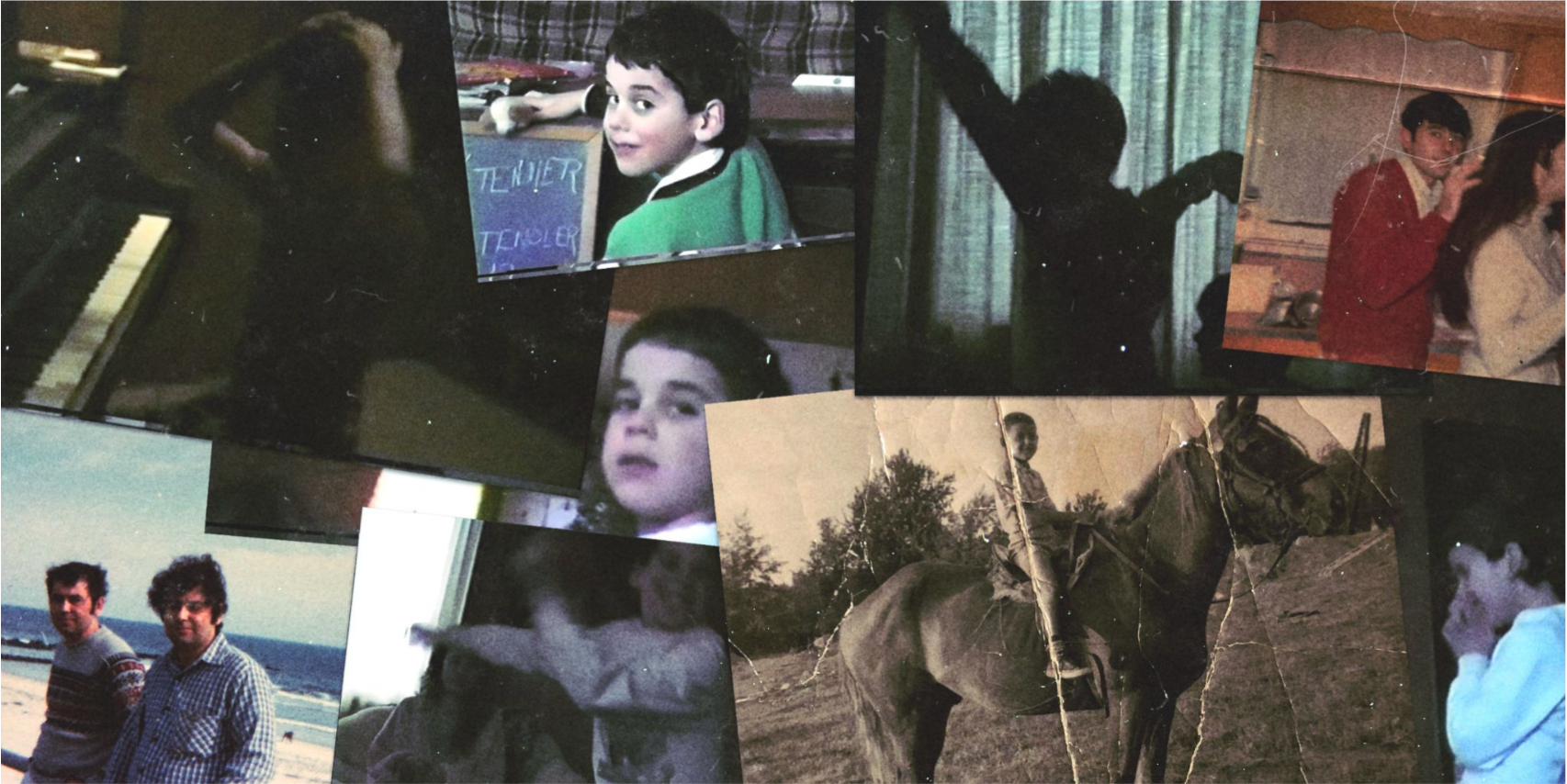
“Debts are temporary. But I could live with these pieces forever.”
-
Tracklist
Remember, I Created You (Laurie Anderson)
Forgiveness Machine (Missy Mazzoli)
In the City of Shy Hunters (John Glover)
Thank You So Much (Pamela Z)
Outsider Song (Scott Wollschleger)
the plum tree I planted still there (Sarah Kirkland Snider)
An Open Book (Timo Andres)
hushing (inti figgis-vizueta)
Eires Sones (Nico Muhly)
False Memories (Marcos Balter)
What It Becomes (Mary Prescott)
Inheritance (Ted Hearne)
You Were My Age (Angélica Negrón)
Area of Refuge (Christopher Cerrone)
We don't need to tend this garden. They're wildflowers (Darian Donovan Thomas)
Morning Piece (Devonté Hynes)
Credits
Executive Producer:
Anthony B Creamer III
Recorded March 2 & 3, 2024, at Oktaven Audio, Mount Vernon, NY
Produced by Judith Sherman
Engineered by Charles Mueller
Engineering and editing assistant: Jeanne Velonis
Additional mixing by Charles Mueller (Wollschleger and Cerrone)
Piano technician: Michael Jurewicz
Mastered by Jeanne Velonis and Judith Sherman
Album Artwork: Brock Lefferts
PRESS & NEWS
"My favorite nominee [...] is pianist Adam Tendler and his ambitious commissioning project Inheritances [...] Each composition combines into a collective exploration of grief, and Tendler's tenderly structured solo performance of the program (which I caught this summer at PS21 in Hudson, New York) delivered the biggest emotional gut-punch I got from a concert all year."
—Michael Andor Brodeur, The Washington Post







COMPOSERS





ARTIST
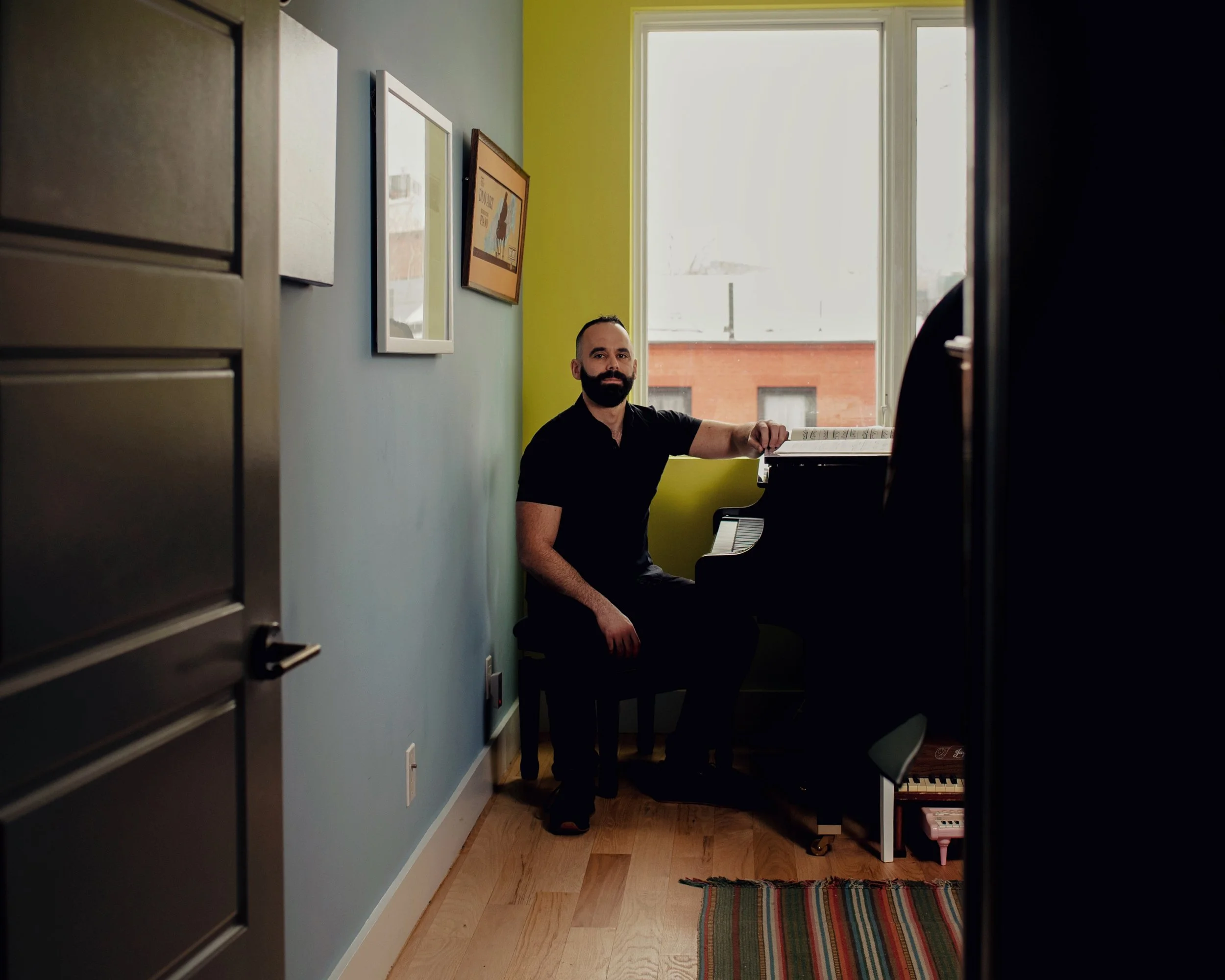
A "daring pianist" praised for his "adventurousness and muscular skill" (The New York Times), 2026 Grammy-nominated artist Adam Tendler has been called "the hottest pianist on the American contemporary classical scene" (Minneapolis Star Tribune), “relentlessly adventurous” (Washington Post), a "remarkable and insightful musician" (LA Times), an "intrepid... maverick pianist" (The New Yorker), and "one of contemporary classical music's most intentional and daring pianists" (Seven Days). "If you're a cutting-edge composer these days," said CBS Sunday Morning's Lee Cowan, "you want Adam to perform your pieces."
A pioneer of DIY culture in classical music, at age 23 Tendler performed solo recitals in all fifty states as part of a grassroots tour called America 88x50, and has since become one of classical music's most recognized and celebrated artists, featured on CBS Sunday Morning, receiving Lincoln Center's Emerging Artist Award, the Yvar Mikhashoff Prize, and appearing as soloist with the London Symphony Orchestra, LA Phil, Sydney Symphony, Toronto Symphony Orchestra, NJ Symphony, Vermont Symphony Orchestra, as well as on the main-stages of Carnegie Hall, the Barbican Centre, Sydney Opera House, BAM, David Geffen Hall. Walt Disney Concert Hall, Milan Fashion Week, and other leading series and stages worldwide.
His Inheritances album, 16 new pieces commissioned using the inheritance left after his father's unexpected death, has been nominated for a 2026 GRAMMY® as Best Classical Instrumental Solo, was a New York Times Critic Pick, which wrote, "You will be moved, profoundly and intensely," and described the project as "a display of contemporary compositional force...a true show...emotionally involving...with a sense of true dramatic stakes." The Washington Post added, "the biggest emotional gut punch I got from a concert all year." Tendler is featured on Wild Up's Grammy-nominated third volume of Julius Eastman's music, and has also released albums of music by Franz Liszt, Robert Palmer, and of his own original work. Tendler’s 2024 immersive installation, Exit Strategy, as Green-wood Cemetery’s artist in residence, received national attention and engaged hundreds of contributing community members. He is the author of two books, a Yamaha Artist, and serves on the piano faculty at NYU.
<style>
 body {background-color: tan;}
 #canvas {background-color: tan;}
</style>