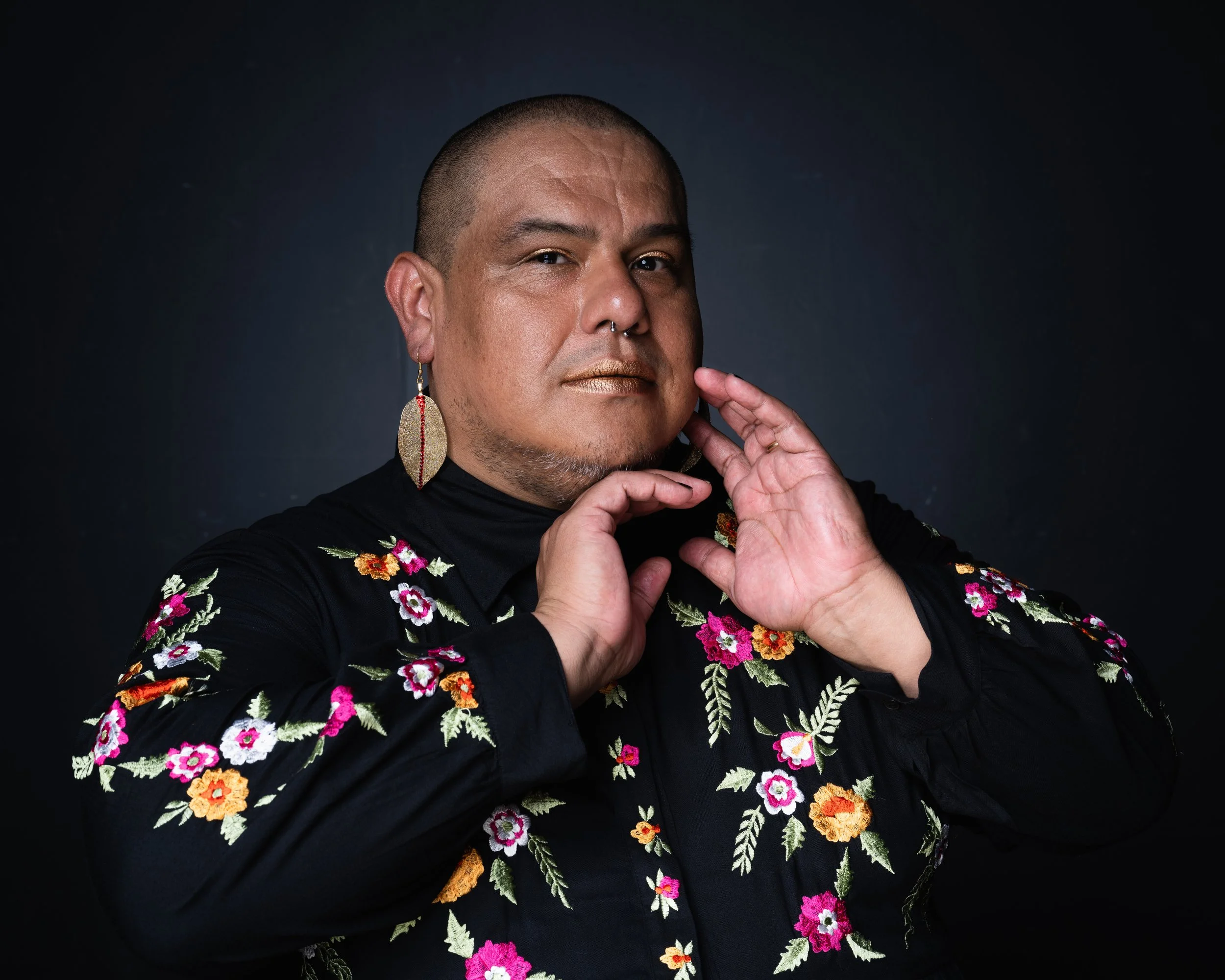
Dorian Wood - Canto de Todes
dorian Wood
Canto de todes
Release date: May 1, 2026
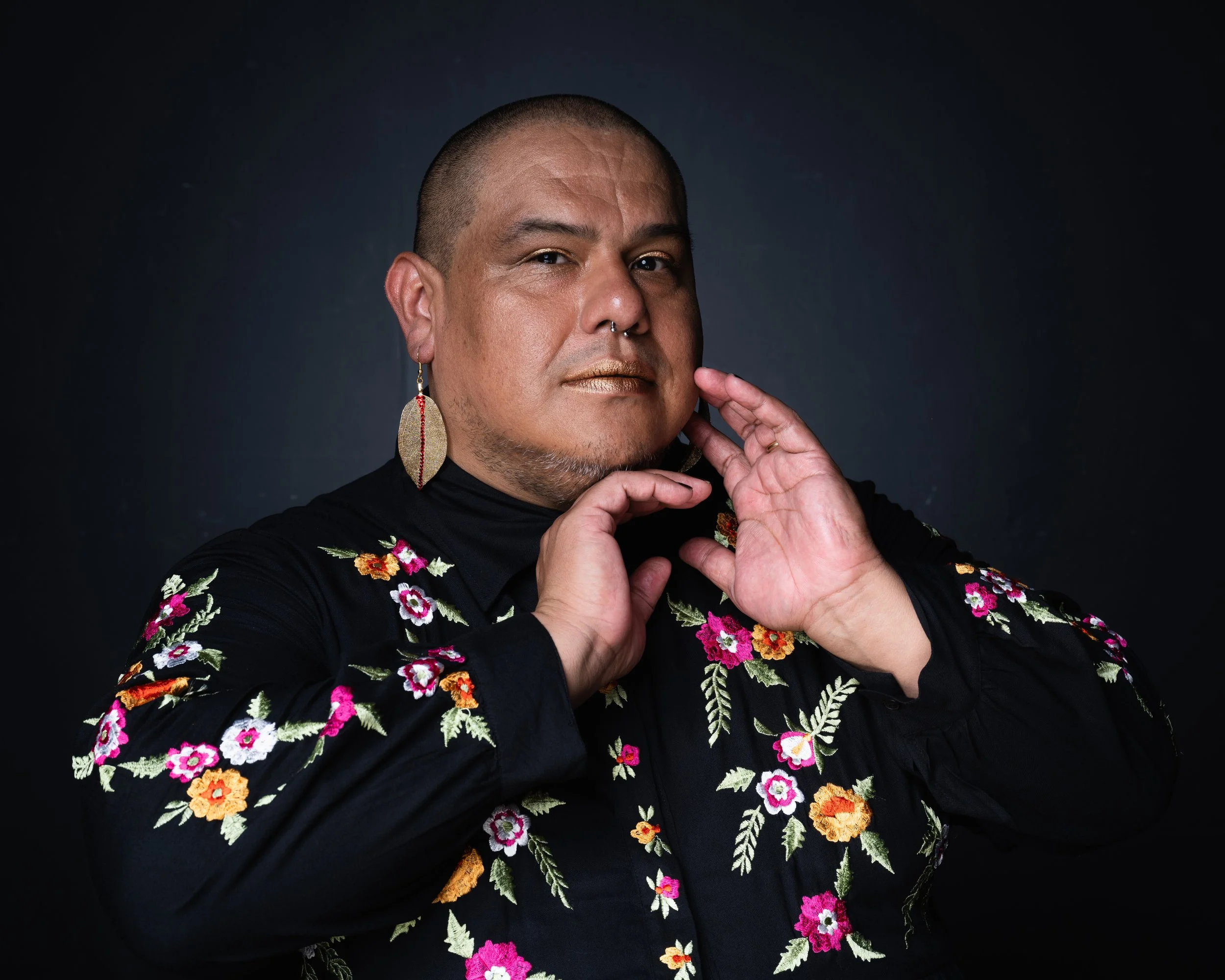
On Friday, May 1, 2026, Dorian Wood (she/her/they/them), the anti-disciplinary artist based in the U.S whose intent of “infecting” spaces and ideologies with her creative practice is born from a desire to challenge traditions and systems that have contributed to the marginalization of people, releases Canto de Todes via New Amsterdam Records.
Weaving together chamber classical, folk, torch song, and experimental music, Dorian Wood’s Canto de Todes is a 70 minute distillation born from Wood’s acclaimed 12-hour composition and installation. The title—Spanish for “Song of Everyone”—is inspired by a lyric of the late Chilean singer and songwriter Violeta Parra. Canto de Todes emphasizes the urgency of music as a vessel for social change, and honors the ancestral trajectory of Wood’s Costa Rican-Nicaraguan family and their experience in the U.S.
The 12-hour version of the work is divided into three movements. The first and third movements are hour-long chamber pieces. The second movement is a 10-hour pre-recorded, multi-channel piece intended to unfold throughout multiple spaces within the hosting venue. Featuring a cello quartet, guitar and experimental vocalizations, the Canto de Todes album brings together songs from all three movements to create a new, richly-nuanced experience led by Wood’s powerful, multi-textured voice.
Out Now: Girasoles
“Girasoles is an accumulation of all this ancestral energy which is coming out into the streets to pick a fight,” says Wood. An anthemic defiance, calling for mobilization against gentrifiers, ICE agents, and nationalists while honoring ancestral energy and the processes we each embody in channeling such cosmic strength. She explains, “I'm a firm believer in the strength that we can derive communally through celebration. When I say “we” I refer to the People of the Global Majority—those who are not obsessed with being of a privileged class. I would love for us of the Global Majority to remember who we are and imagine the massive street party that we are capable of throwing. Every single protest, street party, rally, and manifestation, is us coming together in anger, frustration, and celebration to keep us going.”
-
“I’m inspired by artists who have brought folk music to the forefront in a very social minded context, artists like Inti-Illimani, Mercedes Sosa, and Chavela Vargas,” says Wood. “Artists who have taken art beyond escapism or entertainment, and are instead using music as a vessel for mobilization to fight against societal oppression. I wanted to celebrate that spirit in a way that was engaging while creating, as I do with so much of my work, a collaborative environment in which people can project their joys and traumas, for as long as they wish.”
Canto de Todes captures the “fifth mutation” of Wood’s long form installation. She says “I created this project with the freedom to mutate as it went along. Every presentation is custom-modified for each institution, and counts on collaborations with local artists of all mediums, whose respective interactions are permanently incorporated into the body of this evolving piece. By the fifth iteration we had this version that I wanted to commit to recording that takes elements from what Canto de Todes has been evolving into.”
Wood’s process of distillation was informed by recalling emotional highlights from each of the 5 performances. “It just really came down to the moments that I felt truly represented the emotional arc of the piece based on how I responded emotionally to how people responded in the spaces,” explains Wood. “At the heart of what I do creatively is an interaction, a perpetual conversation with anyone who wants to witness and spectate and listen. I don't compose in a bubble and I thrive with the idea that I'm not alone in this world, and that this work isn't informed solely by me being locked up in a room and trying to dig a way out. I think it's all about a conversation.”
Album opener “Lirios” (Spanish for lilies) is a meditative instrumental composition for cello quartet and guitar. The looping melodic figure invokes memories of Wood’s daily childhood commute up a mile long hill while living in Escazu, Costa Rica. Wood recounts her memories of daily struggle and relief. “Living like that for four years really helped me not take things for granted. The repetitive action of going up and down this hill every day for four years made me feel free. I remember a sense of peace and wonder every single day mixed in with how challenging it was to move up this hill each time.”
“Anonas”—named for the fruits that grew in Wood’s childhood home in Costa Ricais a slow-moving defiance to God that morphs into two separate loves intertwined into one. Empowered thoughts on polyamory, mental health and community mobilization against tyranny. Says Wood: “This is a love song for two people who represent a love that I strive for myself to embody: love at its sloppiest, love at its most compassionate, love at its most selfish and at its most generous, love at its most unbridled, love as as the foundation for radical change, and love as the most transgressive thing that we could ever enact in this life.”
A cosmic whirlwind of voice and strings exploding from a goddess protagonist who confronts her own familial traumas, “Brown Dove (The End)”, rises up to the stars as a vengeful celestial storm. “This song goes back to my blood family and how the older I get, the more I acknowledge the effect that my family has had on me,” says Wood.
“Mapas” is a map of the world in which all of these largely unnamed trajectories move simultaneously as if every single adventure through time was piled one on top of the other. The piece is made entirely of Wood’s voice which perpetually blooms out of itself to create an immersive soundscape.
Originally featured on Wood’s 2021 album REACTOR, “Honey” is reimagined for cello quartet, guitar and voice as a plea to the masses for an end to “white indifference”; a soaring disruption in the status quo. “This piece connects with Canto de Todes as a way of promoting societal change through joyful transgression. In each of us is a radical that can do something spectacular, to end the waves of oppression that we have normalized for so long that continue to hurt people.”
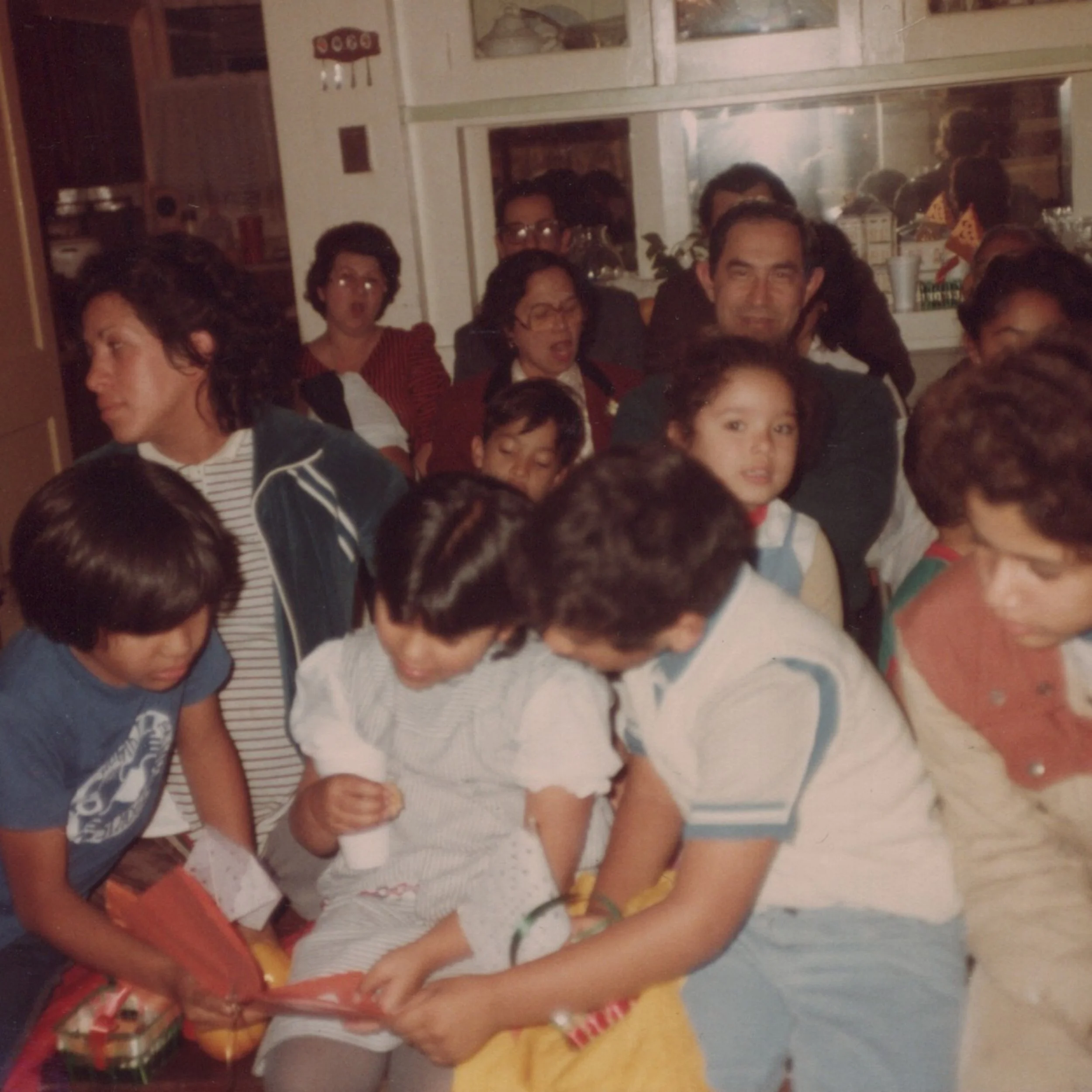
Featuring vocalists Carmina Escobar, Roco Córdova, and Dorian Wood, “Nubenegra” sonically imagines the tornado that swept through Downtown Los Angeles when Wood was a child and narrowly missed her house. Says Wood, “My sister, my cousin, and I weren't allowed to look out the window as it was coming down the middle of the street. My mom was holding us down and describing what it was that she saw. At the time of the recording of the album, the third movement was an interpretation of my childhood that took place in that house on Hill Street and each of us took turns playing a particular family member. Nubenegra was a section from that.”
“La Hill,” a piece for cello quartet, chronicles the 30+ years Wood’s family spent at her other childhood home, on Hill Street, just south of Downtown L.A. “La Hill is a playback of every single memory that was within my own existence, within that house, but also recalling stories that my mother told me of her being a teenager in that house, when they bought that house, everything that happened in that house prior to the fire.”
Album closer, “Dormilonas,” another selection from the second movement, sees Wood’s vocals mimicking the “dormilonas,” or “shameplants” that grew at Wood’s childhood home in Costa Rica. Wood recalls: “I just remember going up into the front yard on a foggy morning and just seeing all the dormilonas out there and just getting on the grass and just touching every single one of them. I remember finding so much wonder in that. The piece is a little prayer to the self that calls to that calming, little child that comes to this open dormilona.”
Dorian Wood’s Canto de Todes invites us to project our own joys and traumas within her lush sonic world. Wood creates a space for us to let go, listen, lose ourselves, and come out the other side feeling a little closer to who we are at our core.
-
Tracklist & Credits
Lirios
Anonas
Brown Dove (The End)
Mapas
Honey
Nubenegra
Girasoles
La Hill
Dormilonas
Produced by Dorian Wood
All songs composed by Dorian Wood
Copyright 2025 Why Are You Doing This Music (ASCAP)
Tracks 1-3, 5-8
Recorded at Roy O. Disney Concert Hall, Valencia
Recording engineer: Luisa Pinzon
Production assistant: Sam Gerike
Coordinator: Mads Falcone
Voice: Dorian Wood
Voice: Carmina Escobar
Voice: Roco Córdova
Cello: Adrián Cortés
Cello: April Guthrie
Cello: Christopher Votek
Cello: Emily Elkin
Guitar: Michael Corwin
String arrangements by Dorian Wood
Transcriber: Adrián Cortés
Tracks 4 and 9
Recorded at Etopía, Centro de Arte y Tecnología, Zaragoza
as part of the FUGA Artist Residency
Recording engineer: Dorian Wood
Voices: Dorian Wood
Mixing and mastering engineer: Xavi Muñoz
Canto de Todes was made possible with support from:
Creative Capital
FUGA
Foundation for Contemporary Arts
National Association of Latino Arts and Culture
Los Angeles County Performing Arts Recovery Grant
Loghaven Artist Residency
MacDowell
NPN Documentation & Storytelling Fund
PRESS & NEWS



ARTIST
COMPOSER